
Noticias
Mejora de la asimetría del jinete

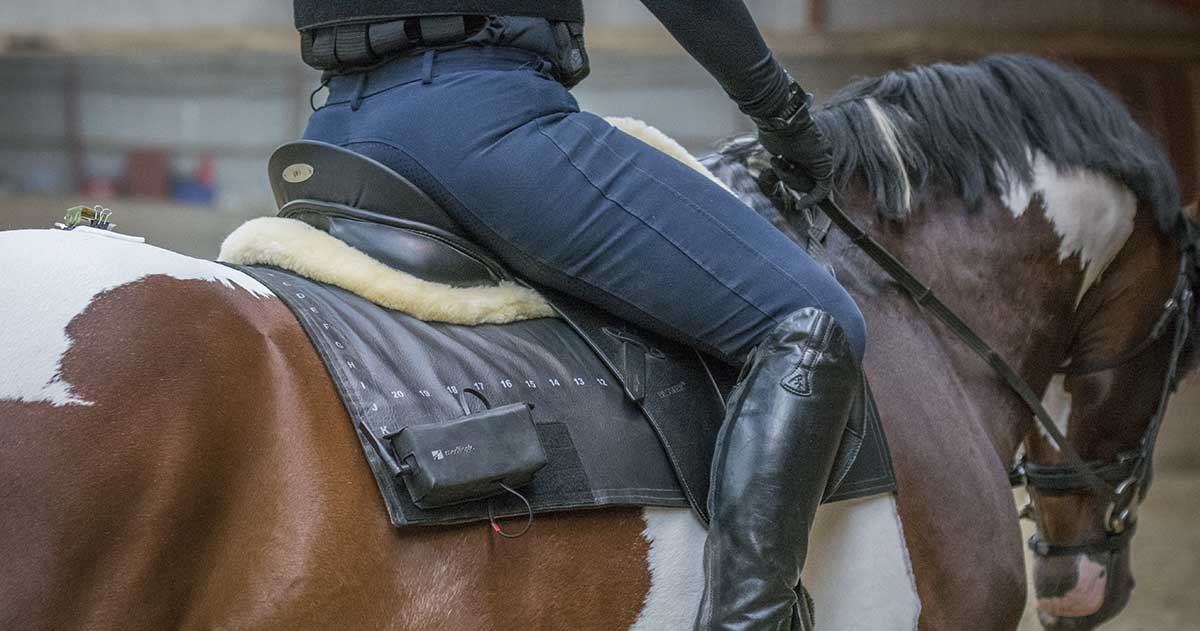

Si fueras un jinete desequilibrado, ¿No te darías notar que?
No necesariamente, Los científicos dicen. People usually feel their own natural asymmetry as symmetrical. Their horses, however, haría notice—managing uneven weight across their backs which might even make them compensate by becoming asymmetrical themselves.
“For the welfare of the horse, it’s important as riders, we recognize our own asymmetry and adjust that for better balance in the saddle,” said Mette Uldahl, DVM, Cert. Equine Diseases, of Vejle Hestepraksis in Denmark, Fédération Equestre Internationale (FEI) National Head Veterinarian for Denmark, veterinary consultant for the Danish Equestrian Federation, and president of the Federation of European Equine Veterinary Associations.
To help riders see their own asymmetry, Uldahl and her fellow researchers developed a simple home test using commercial bathroom scales. Riders can stand with one foot on each of two scales, set equal distance apart from the middle of the rider’s body, and note the differences in the weights given under each foot, she said.
They can also check their balance by doing simple balance exercises on an inflated polyurethane gymnastic ball. If they struggle to stay upright with their hands extended to the sides or in front of them, they might need to improve their balance, she said.
To test these ideas, Uldahl and her fellow researchers compared bathroom scale readings and gymnastic ball exercise scoring to pressure mat readings under saddle. They worked with 20 dressage riders of various levels of experience, who were involved in a larger study on the effects of rider weight on horses.
On average, these 20 riders showed a weight difference of about 3 kg between the left and right sides on the bathroom scales.
This corresponded well to the readings the scientists saw in real-time on the pressure mats during the three-gait dressage test during which the riders rode their own horses. The researchers also noted that the more imbalanced the rider was on the gymnastics ball, the more asymmetry she showed in the saddle according to pressure mat readings.
“Most of the riders in our study were surprised—both by the scale readings and by the pressure mat readings. People just don’t feel themselves as being off balance because they’ve adapted to that imbalance over years and years, and it feels natural to them. It just doesn’t feel natural to the horse.”
Interestingly, however, that asymmetry tended to dissipate as the riders added artificial weights to their bodies, she added. As part of the rider weight study, the riders had to add up to 25% of their own body weight during the ride, using weighted metal bars slipped into pockets of a vest they wore during the ride.
Uldahl noticed that when the riders had 25% of their body weight added, they seemed to “fix” their poor balance.
“Perhaps they became more aware of their asymmetry because of the excess weight,” she said, adding that this incidental finding might become a starting point for researching ways to improve straightness in riders.
 Sillines de uso general
 Sillas de doma
 Sillas de montar
 Sillas de montar para eventos
 Mostrar sillines
 bridas flash
 Bridas sin bocado
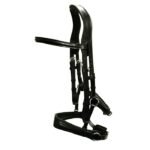 Bridas Cavesson
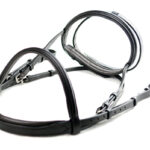 Bridas Confort
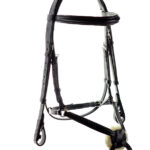 Bridas de grackle
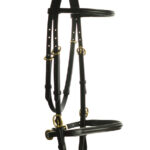 bridas en mano
 Bridas lisas
 Bridas suaves
 Cabezadas de polo
 Bridas Weymouth
 Bridas de carrera
 Brocas colgantes para mejillas
 Bocados de Weymouth
 Frontaleras
 Mejillas
 Puestos de cabeza
 Tocados
 y bandas
 Riñones
 Cinchas Anatómicas
 Cinchas Doma
 Circunferencias de uso general
 Alforjas de doma
 Propósito general
 Saltar
 Estribos
 Cueros de estribo

 Máscaras antimoscas
 Enfriadores
 Alfombras de mosca